
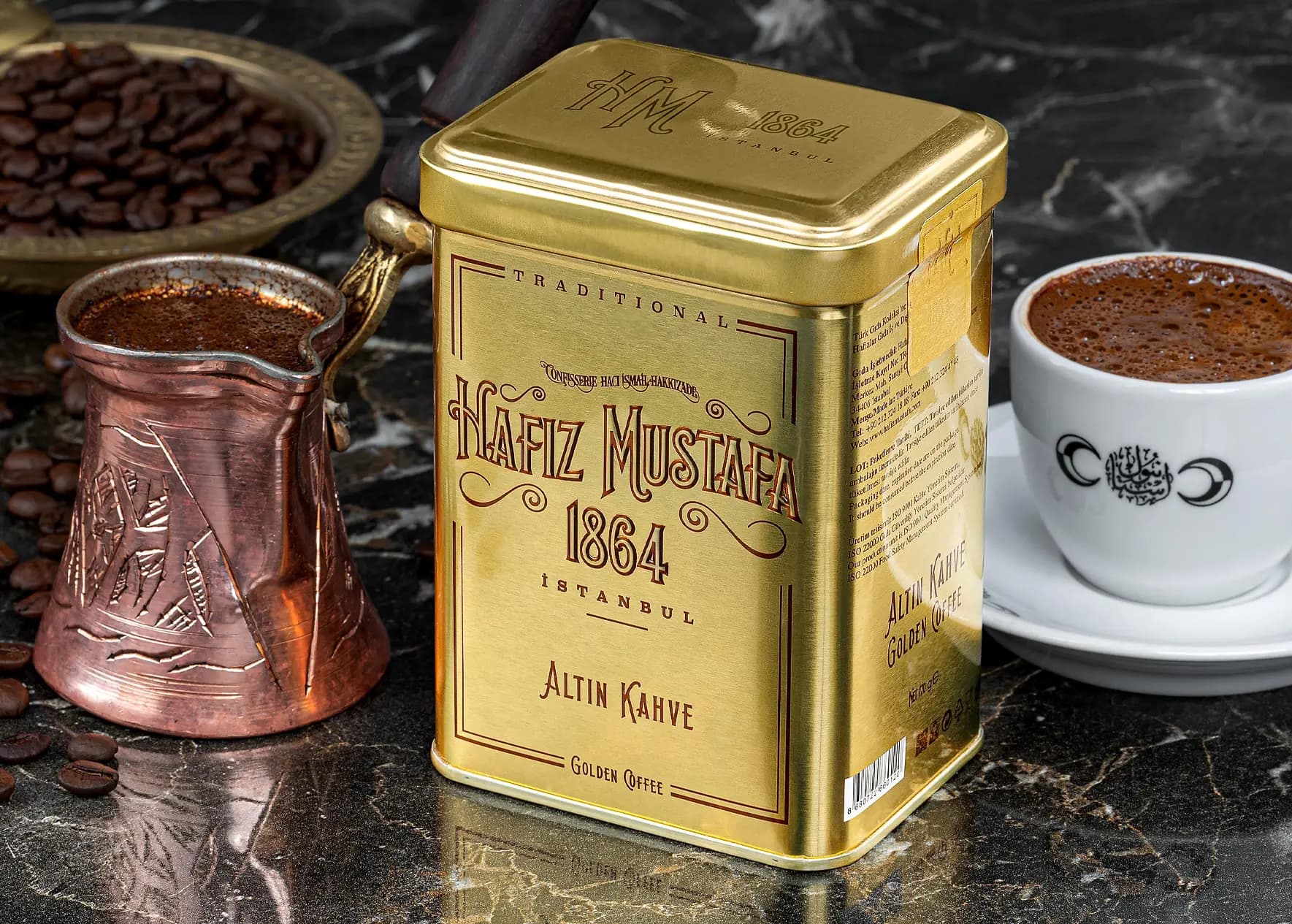
Hafiz Mustafa’s coffee recipes include aromatic ingredients that change the cup’s flavor, with milk specified for some preparations and cold water used for others. We prepare Golden Coffee with saffron. In Coffee Anatolia, mesir paste contributes a warm, spicy character alongside the coffee itself.
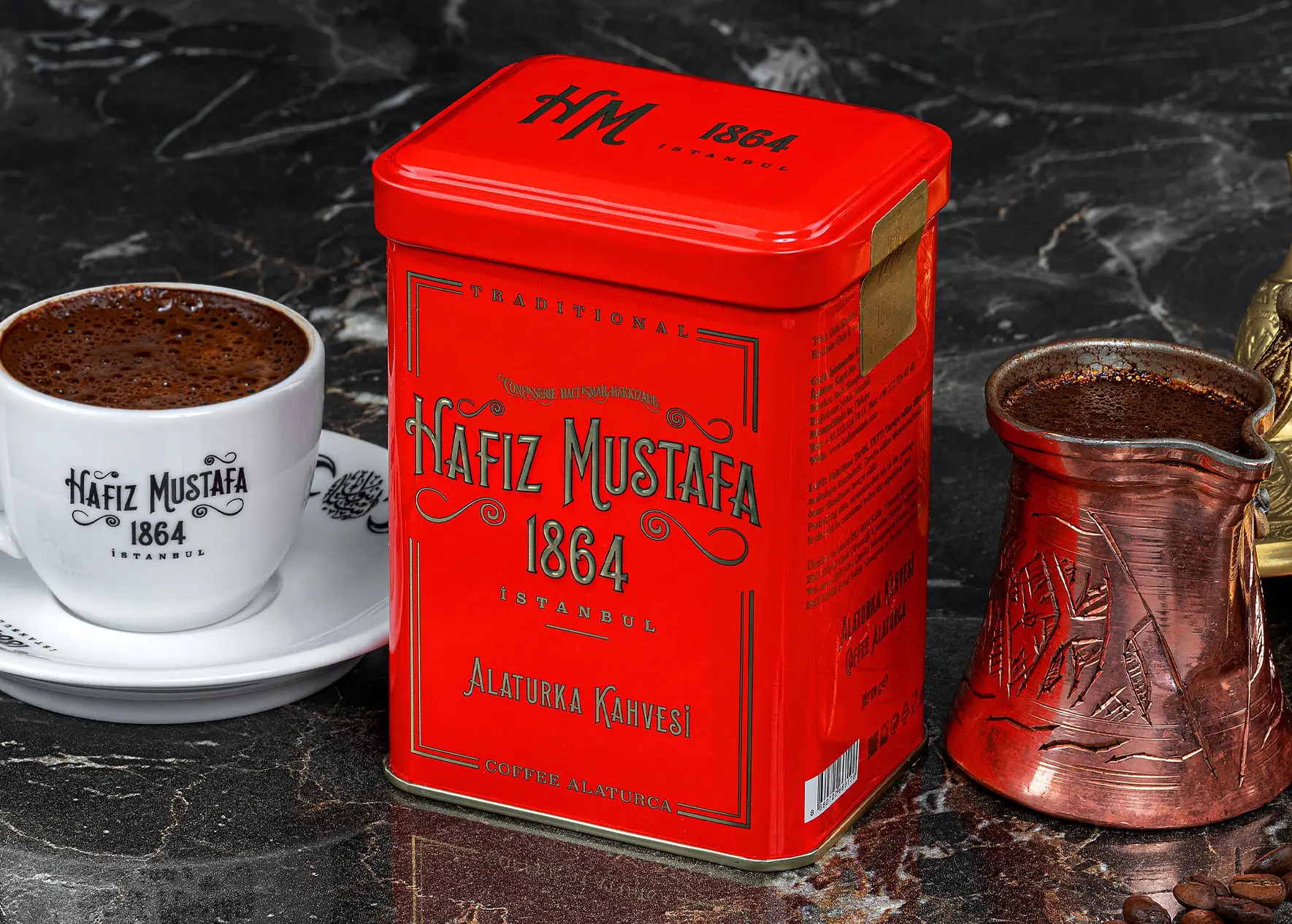
If you have enjoyed a particular coffee during a visit, its ingredients offer the best starting point for preparing the same drink at home. Gum mastic supplies a pine-like fragrance. For the creamy character associated with salep, look for Alaturca Coffee, which includes salep alongside its Arabica base.
Arabica Beans and a Fine Grind
Turkish coffee takes its name from its preparation, and the beans used in our aromatic coffee recipes are grown in Central America and Africa. We select Arabica cultivated at altitudes between 1,600 and 1,700 meters. After a medium roast, the beans rest before milling, producing the fine powder required for the cezve.
Foça stone mills are part of our coffee preparation, with the stones named for the area on Türkiye’s Aegean coast from which they originate. Within the collection, the coffee receives its aromatic ingredient according to the particular recipe. Gum mastic supplies resinous notes; the saffron recipe has a floral character.
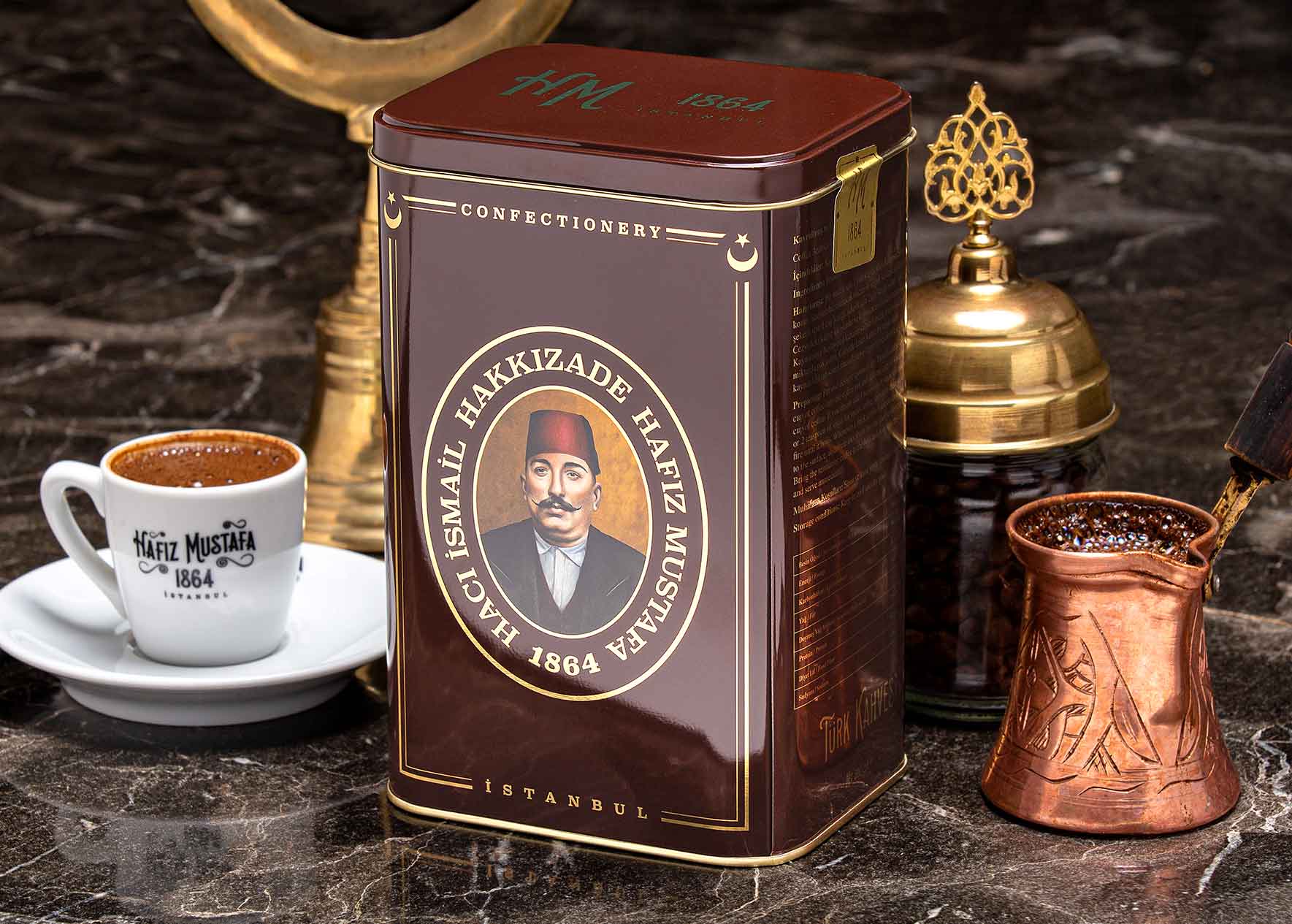
Classic Turkish Coffee for the Familiar Cup
Turkish coffee’s powder-fine grind suits direct heating in a cezve, the small coffee pot traditionally used to prepare the drink. We offer classic Turkish coffee in a 170-gram package. For households that frequently prepare coffee, the 500-gram package offers a larger quantity in the classic selection.
Choose classic coffee when you want the roasted flavor to accompany dessert, with sugar added during preparation to taste. For the classic preparation, our published directions specify a heaping teaspoon of ground coffee per cup of water. Measure the water in the cup you intend to use, then place it in the cezve with the coffee. As the liquid heats, foam develops at the surface and is transferred into the cups during pouring.
Turkish coffee arrives at the table with its grounds, which settle at the bottom as the cup rests between pouring and drinking. Take small sips from the liquid above the sediment. Beside the cup, a glass of water is part of the customary presentation, together with a small confection such as Turkish delight.
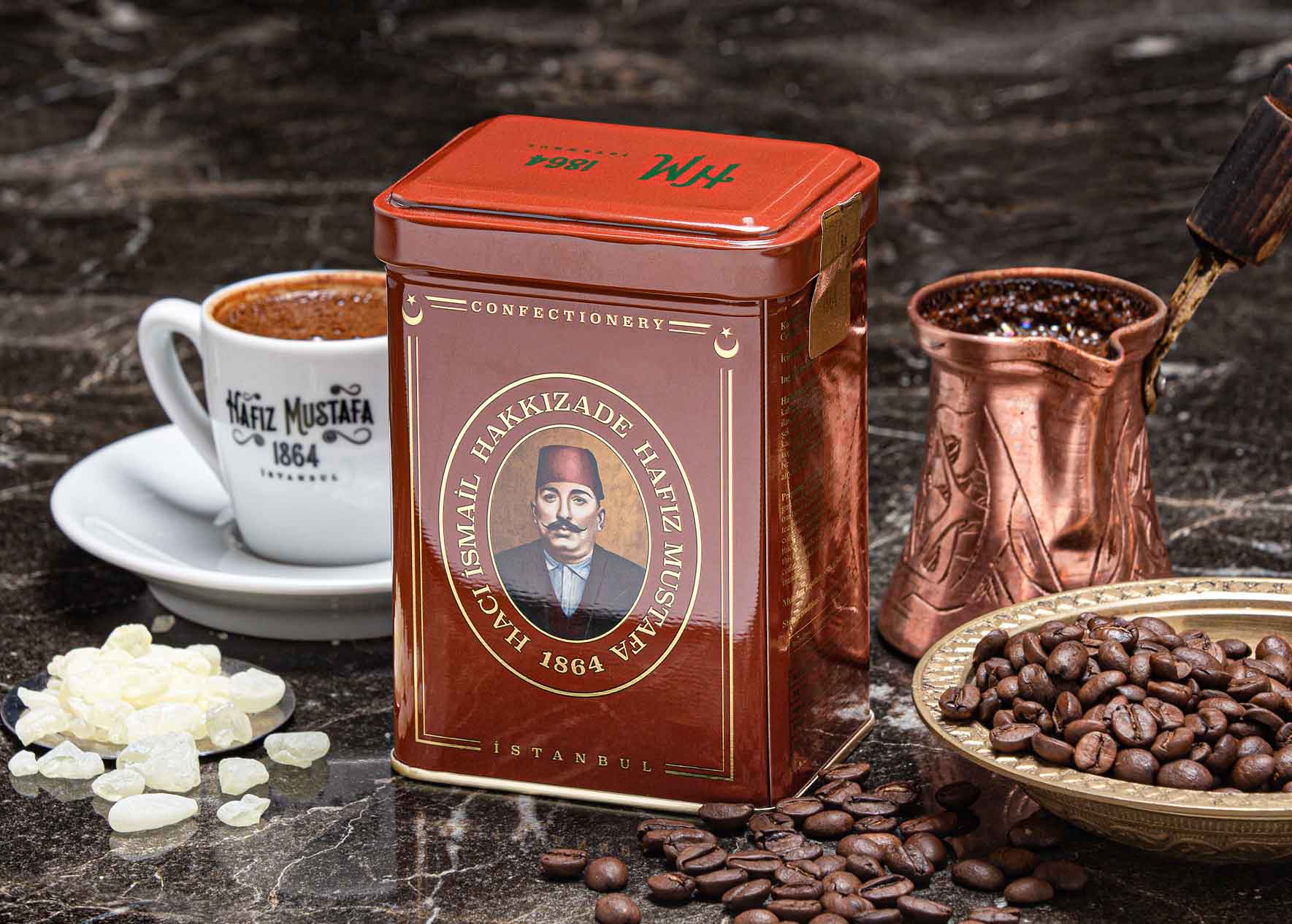
Gum Mastic’s Herbal Fragrance
Natural gum mastic supplies the herbal aroma in Gum Mastic Turkish Coffee, with pine-like notes alongside the medium-roasted Arabica. We package this water-based recipe in a 170-gram presentation.
Mastic comes from an aromatic resin produced by the Pistacia lentiscus shrub, which has a long place in eastern Mediterranean culinary traditions. On the Greek island of Chios, growers collect resin after making small incisions in the bark. Once the resin has hardened, the pieces are gathered and cleaned for use.
The hardened pieces collected by mastic growers are often called tears, with the larger pieces selected ahead of washing and storage in cool conditions. Growers prune and tend the shrubs throughout the year, ahead of the summer incisions. Families pass the collection techniques to younger generations through work with the trees.
For our coffee, the resin contributes its distinctive fragrance to a recipe prepared with cold water and sugar to taste. Stir the ingredients briefly in the cezve at the start, then heat over medium heat. When foam forms, spoon some into the cups ahead of the coffee’s final rise and pour.
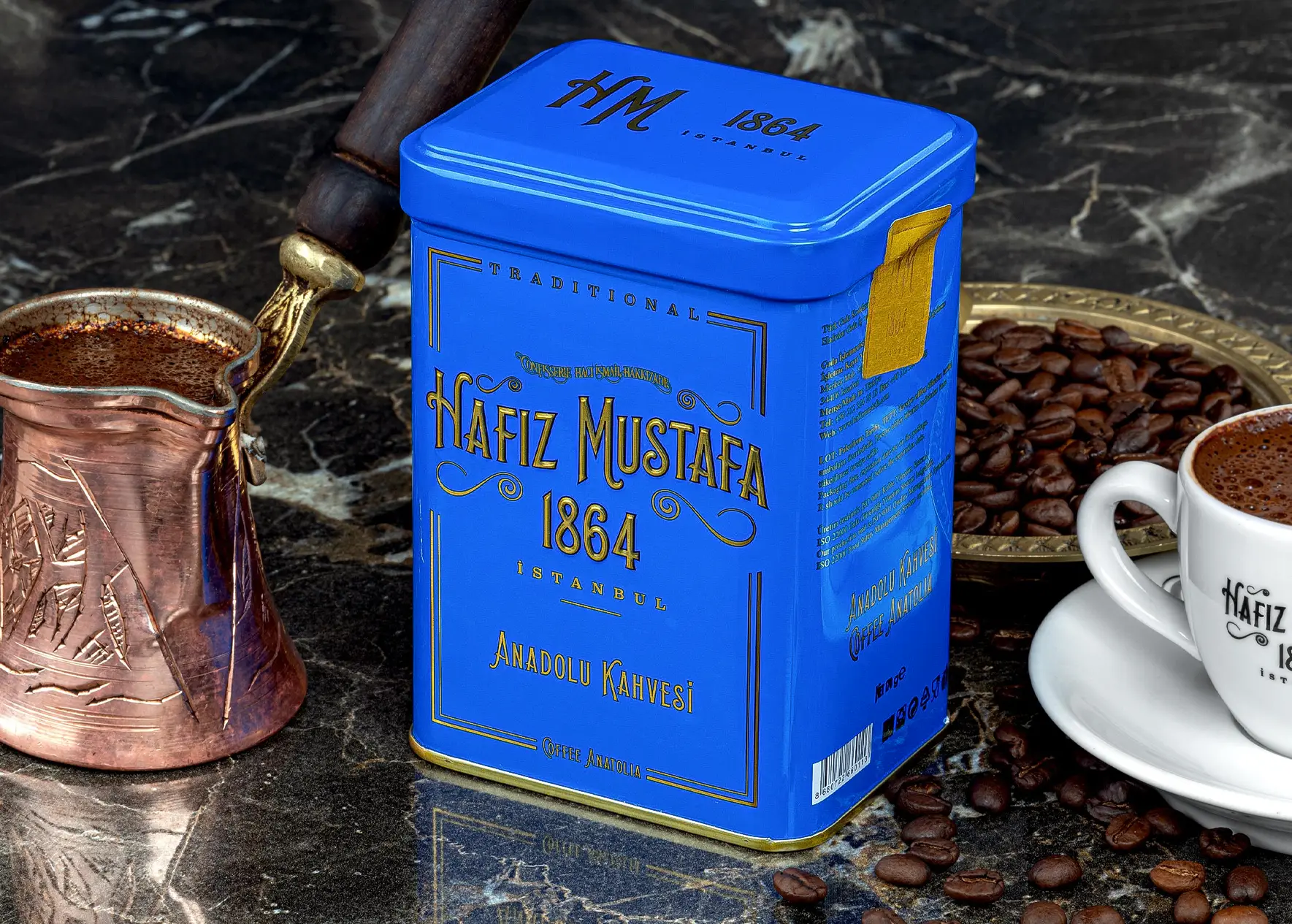
Coffee Anatolia and Mesir Paste
Mesir paste supplies the warm spice notes in Coffee Anatolia, a recipe we prepare with finely ground Arabica coffee for use with milk. The finished coffee comes in a 170-gram package.
Manisa’s mesir tradition includes a festival in which cooks prepare a paste of forty-one herbs and spices for distribution to the public. In the festival’s established practice, the paste is wrapped in small pieces of paper. Visitors gather around the Sultan Mosque as the wrapped sweets are scattered to the crowd.
We use mesir paste for its spicy character at Coffee Anatolia, so the recipe includes a confectionery ingredient in the coffee itself. For a portion at home, measure 2.5 teaspoons into 190 milliliters of cold milk. Heat gently as you stir, then pour the foam into the cup at the first boil and follow with the remaining coffee.
Eren Ongurlar discussed his involvement in developing Coffee Anatolia in a September 2023 interview, which described new coffee recipes at Hafiz Mustafa. He identified mesir paste as the ingredient used in this coffee, with development rooted in Turkish culinary traditions.
Golden Coffee’s Saffron Recipe
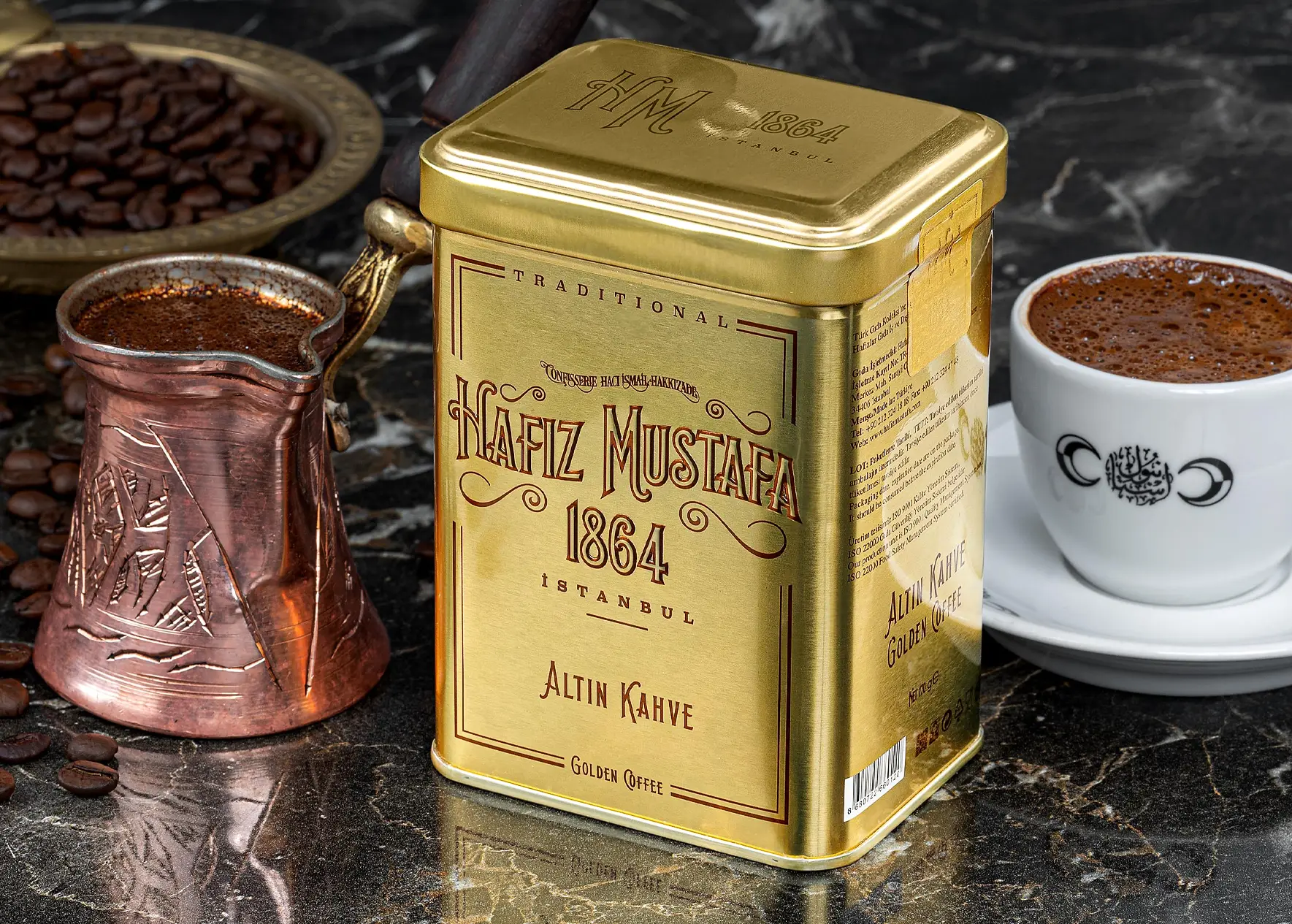
Saffron contributes its floral fragrance to Golden Coffee, which we prepare with Arabica beans cultivated in Central America and Africa. Milk accompanies the coffee during preparation.
The saffron used as a culinary spice consists of dried stigmas collected from the flowers of Crocus sativus, an autumn-flowering crocus. Inside a flower, the red stigmas are separated by hand. After the harvest, the dried threads are used for their aroma and color in cooking.
For one portion of Golden Coffee, use two and a half teaspoons of Golden Coffee with 190 milliliters of cold milk in a coffee pot. Heat gently as you stir until the coffee develops foam and reaches its first boil. Pour the foam ahead of the remaining coffee, then complete the cup after this first heating.
Saffron harvesters remove three red stigmas from a flower, so a small quantity of the dried spice involves work with many individual blossoms. Approximately 150 to 200 flowers produce a gram of dried saffron. Within our Golden Coffee recipe, saffron supplies its aroma to the prepared coffee and milk; the package contains 170 grams of the coffee preparation.
Alaturca Coffee with Salep
Salep appears in Alaturca Coffee alongside Arabica as a traditional Turkish hot-drink ingredient in a milk-based coffee recipe. For the ground coffee, we include salep for the recipe’s creamy character and fragrance.
Traditional salep powder is made from dried orchid tubers, which are milled to produce the ingredient used in the hot beverage. In Turkish salep, milk carries its characteristic texture. Guests familiar with the winter drink will find salep in Alaturca Coffee’s separate recipe, alongside the roasted coffee flavor.
Hafiz Mustafa introduced Alaturca in a June 2023 article that described salep’s inclusion in the coffee-grinding process and the red package used in the recipe. We offer it in a 170-gram presentation. For a guest with an allergy or dietary requirement, our team provides up-to-date ingredient information for the specific coffee product.
Package Sizes and Current Prices
Classic Turkish Coffee is available in two package sizes, with the smaller 170-gram presentation listed at AED 75 on October 27, 2026. For the 500-gram package, the listed price is AED 125. The 170-gram package costs approximately AED 44.12 per 100 grams; the equivalent for the 500-gram package is AED 25.
For households that use coffee daily, the larger classic package contains almost three times as much at a lower price per gram. The package weight reflects the ground coffee, so the number of cups varies with the portion size you use.
Golden Coffee’s 170-gram package is listed at AED 90 on the same date, with Coffee Anatolia’s 170-gram package at AED 75. The salep recipe and Gum Mastic Turkish Coffee are each listed at AED 75 for 170 grams. All five recipes were available through our online shop on the price-check date. You are welcome to ask for your preferred coffee during a visit and take its packaged version home for your cezve.
Up next in the Journal