
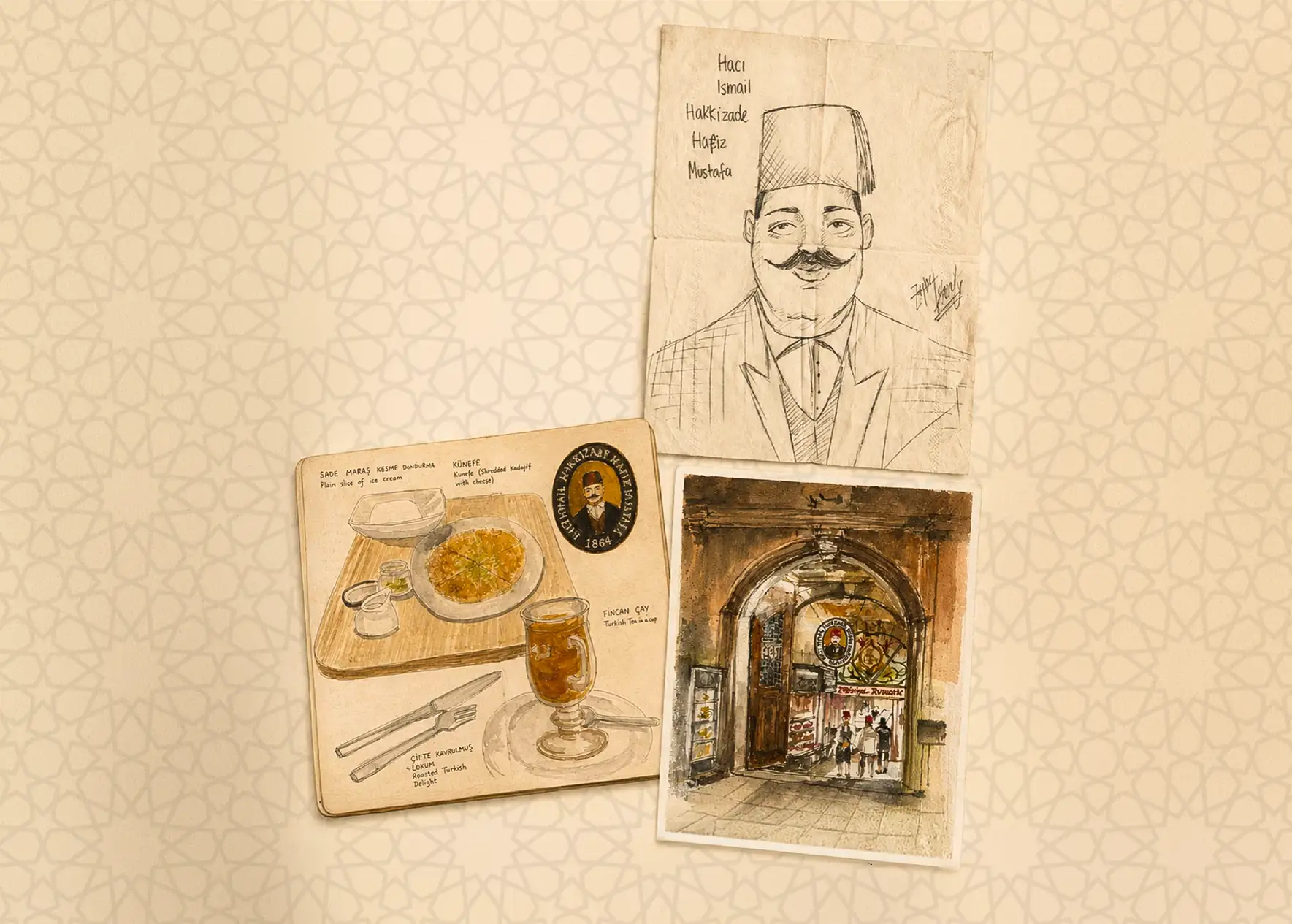
Sometimes it begins with a pencil line on a napkin. Sometimes someone opens a sketchbook after tea arrives. A child may draw what caught their eye at the table. Another guest may take out a watercolor set and spend part of the afternoon beside a plate of baklava.
Then there are the photographs.
One table. One coffee cup. A dessert shared between friends. A family photo after a long day in Istanbul. Small moments, perhaps. Yet we genuinely love seeing them.
Hafız Mustafa has welcomed guests since 1864. Over all those years, millions of people have walked through our doors and sat at our tables. Many came for baklava, Turkish delight, Turkish coffee, or a dessert they had heard about before their trip. Some left us a little piece of their visit in return.
The drawings and photographs on this page come from them.
When a Guest Picks Up a Pencil
There is something very personal in a drawing made during a visit.
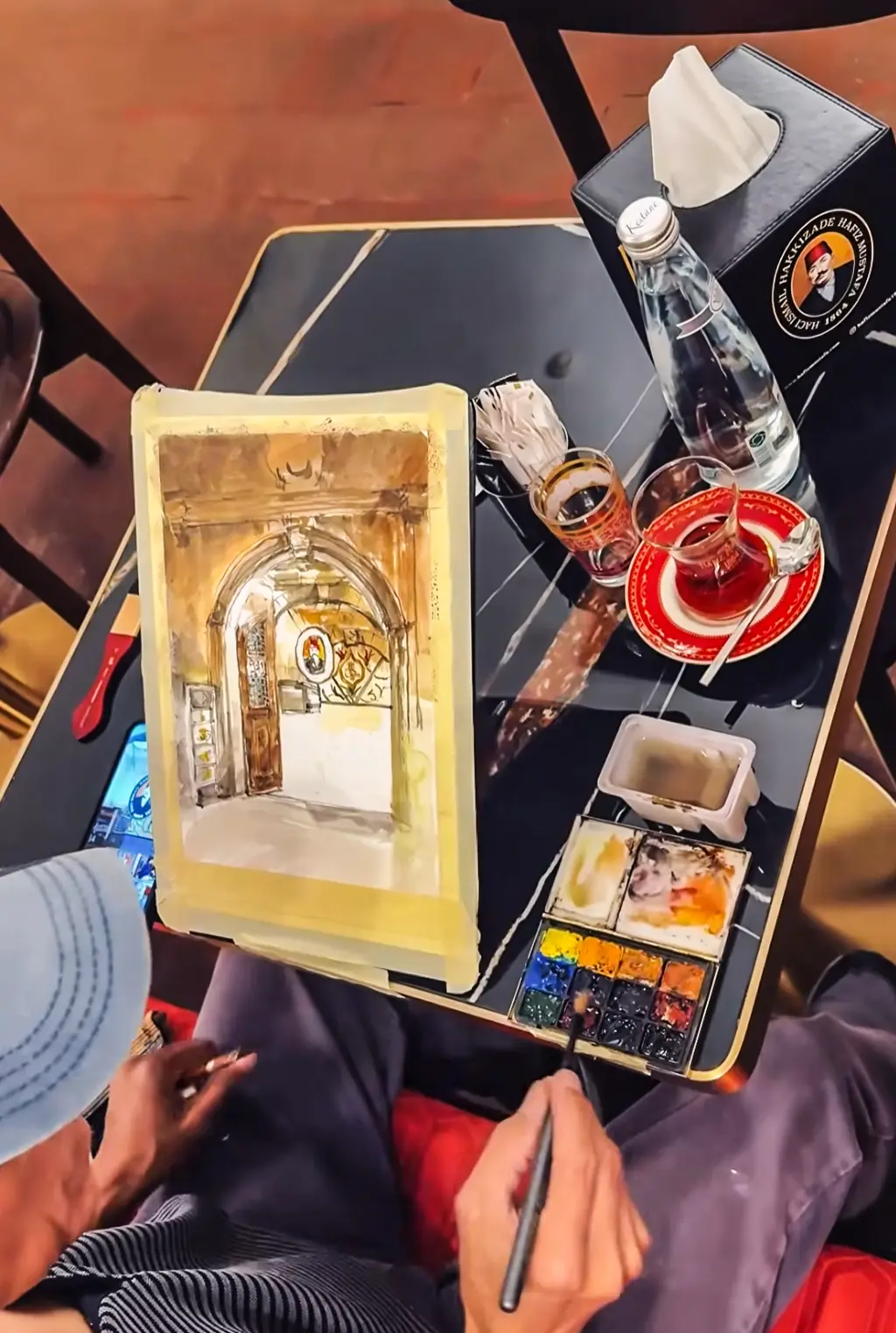
Someone has looked around the room, noticed a cup, a tray, a waiter, a window, or perhaps another person at the table, then decided to put it on paper. No brief. No request from us. The idea simply came to them while they were here.
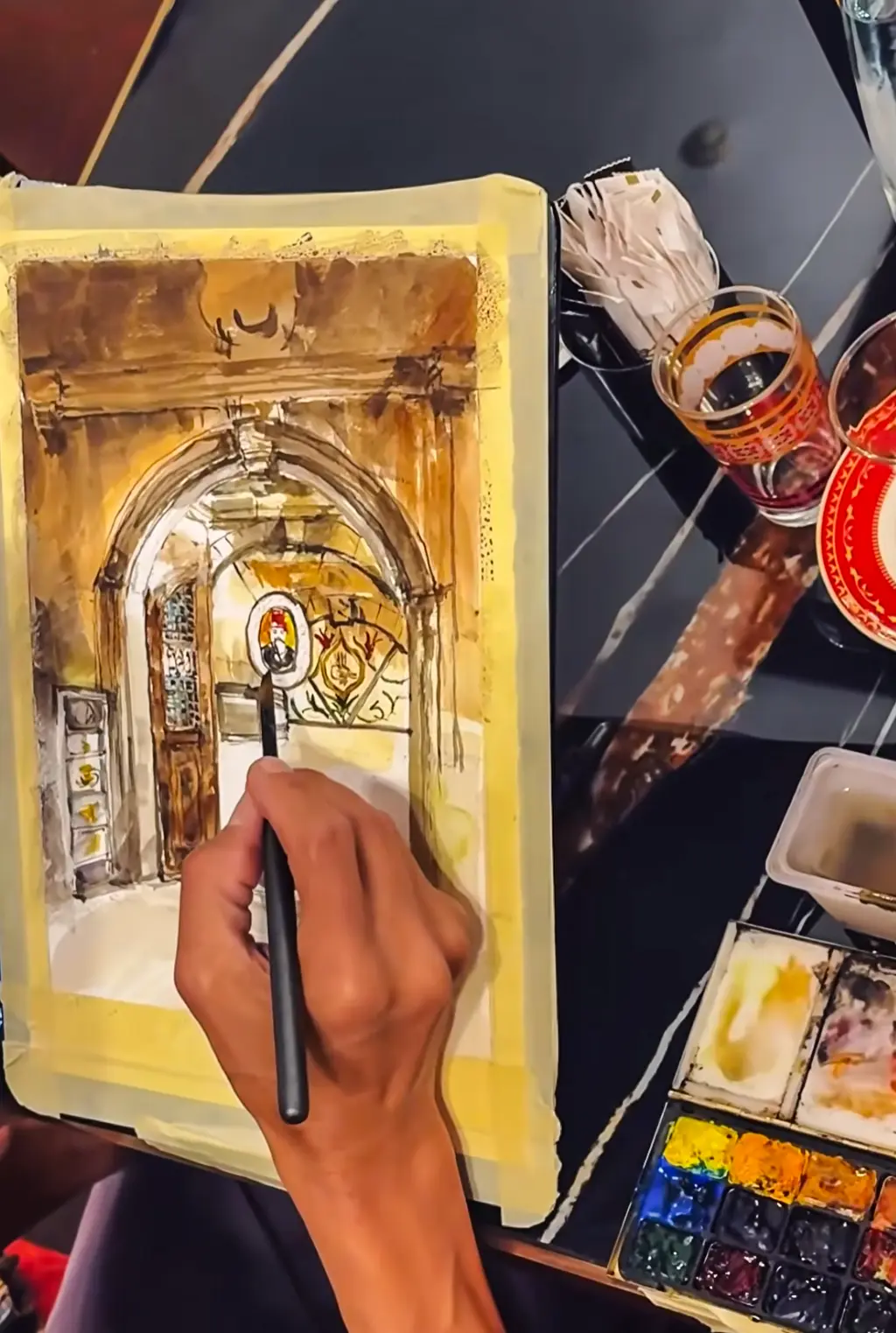
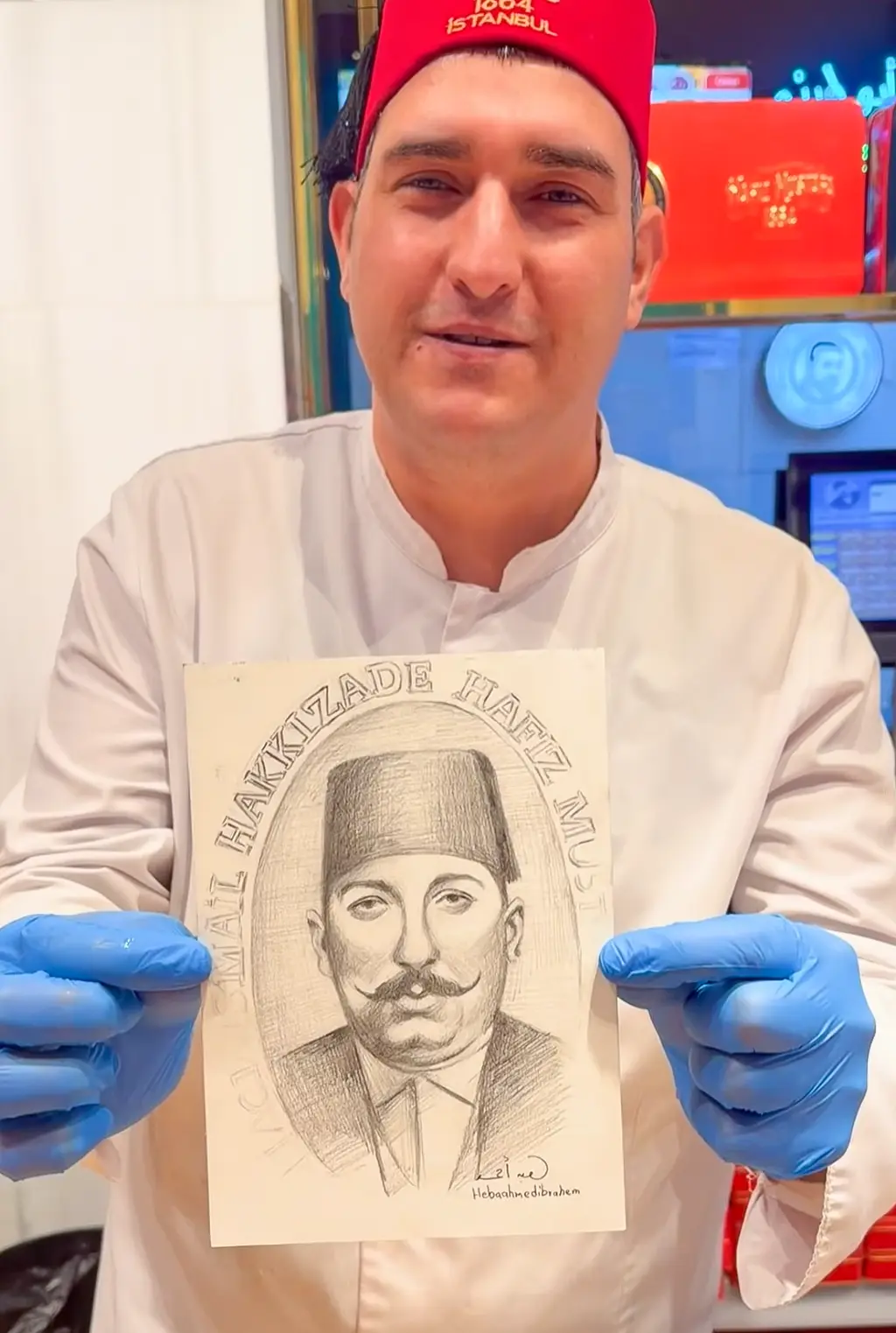
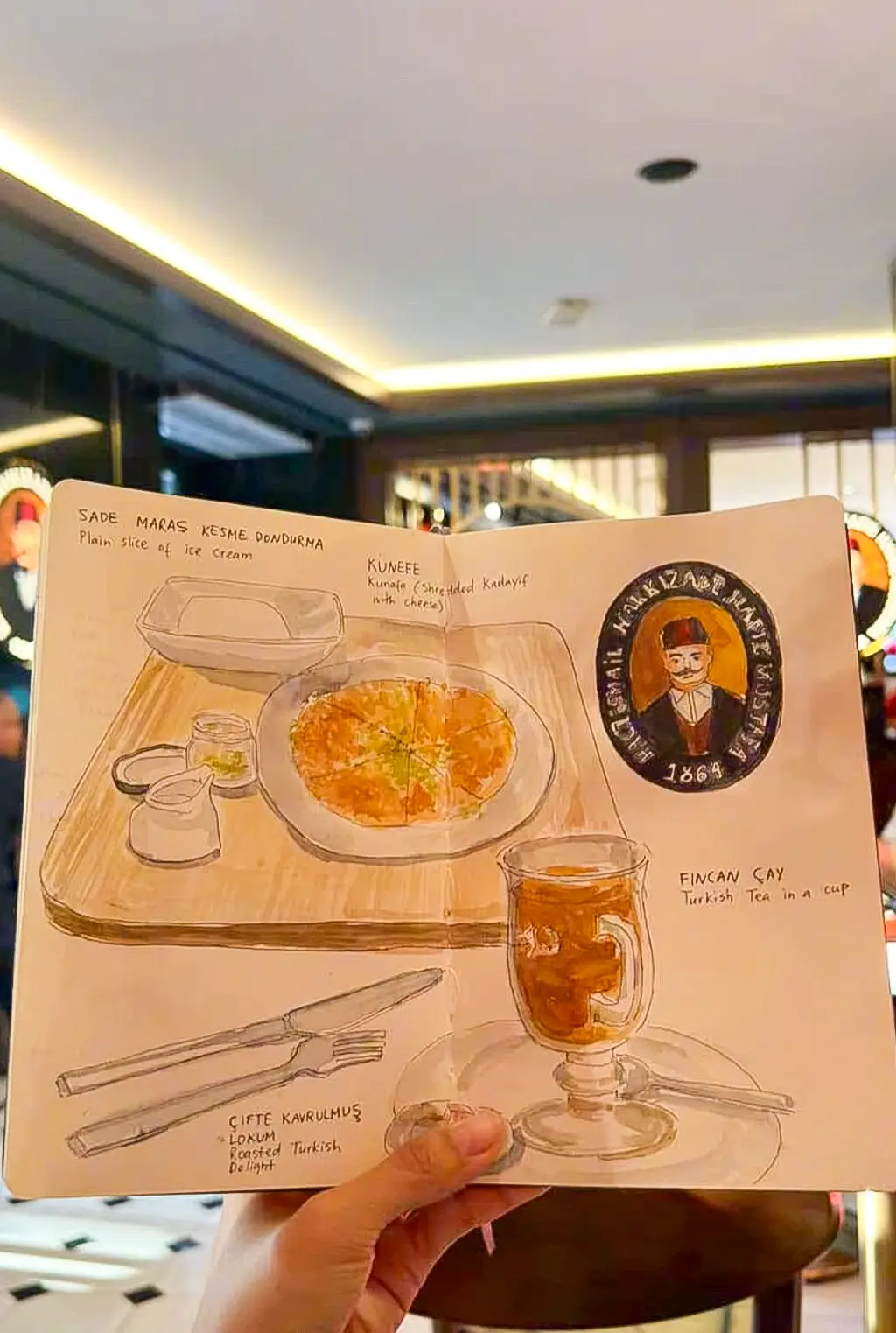
We have seen portraits drawn on napkins. We have received sketches from visitors who sat quietly with a notebook beside their Turkish coffee. Children have handed us drawings full of color. Talented guests have created detailed watercolor pieces inspired by what they saw during their visit.
We keep coming back to one thought: they chose to spend part of their own time drawing Hafız Mustafa.
For us, it feels incredibly special.
A Place Seen Differently by Everyone
People notice different things when they visit us.
One person may remember the green-and-gold details inside a branch. Another may remember the first piece of pistachio baklava they tasted. Someone else may remember the tea glass beside the window or a conversation with family after a long day outside.
Artists notice their own details too.
A few pencil strokes can tell us which corner caught someone’s attention. A watercolor can show us how a guest remembers the colors around them. A photograph can preserve a second that might otherwise pass quietly.
We see Hafız Mustafa every day. Our guests see it with fresh eyes.
Their work lets us borrow those eyes for a moment.
New Memories for a Story That Began in 1864
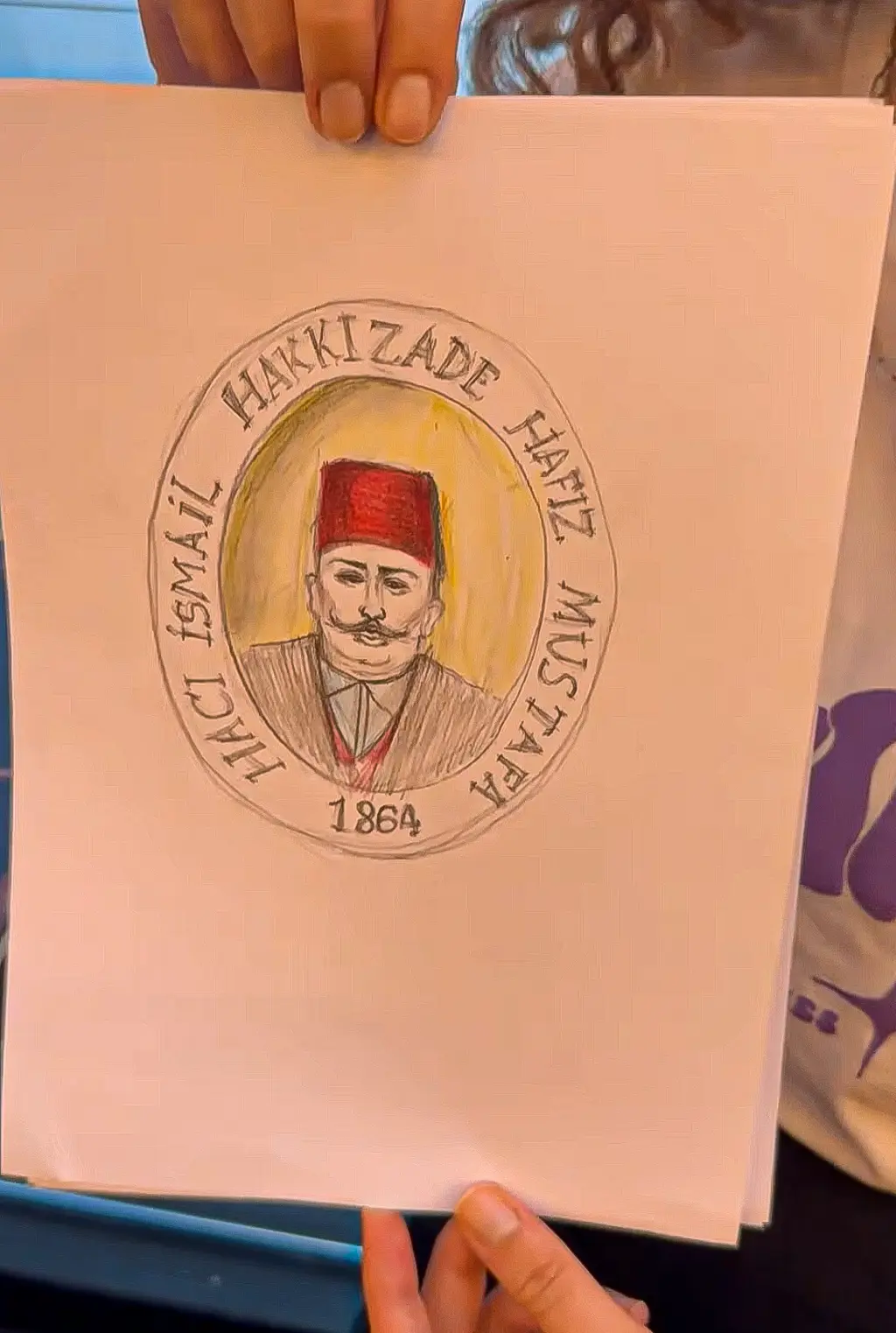
Hafız Mustafa’s story began in Bahçekapı during the Ottoman era. Hacı İsmail Hakkı Bey opened the confectionery in Istanbul in 1864, and Hafız Mustafa later continued the family tradition. Our Bahçekapı history reaches back to a period when Istanbul looked very different from the city we know today.
Generations passed. Istanbul changed. New streets appeared. New countries sent visitors. Cameras replaced old photographic equipment. Sketchbooks changed, too.
The human habit behind all of it remained wonderfully familiar.
People still want to remember places where they felt happy.
For more than a century and a half, Hafız Mustafa has lived inside countless family stories, holiday visits, coffee conversations, first trips to Istanbul, reunions, friendships, and simple afternoon stops. Guests now arrive from many parts of the world, and they add their own memories to a story that began long before any of us were here.
We find real meaning in that continuity.
Some Memories Come Home on Paper
Souvenirs usually leave Hafız Mustafa inside a box.
Baklava travels home to its parents. Turkish delight goes to friends. Turkish coffee finds a place inside a suitcase. Guests choose gifts for people they love, and part of Istanbul travels home with them.
Sometimes the direction changes.
A guest gives something back to us.
Perhaps it is a quick portrait. Perhaps it is a photograph sent after a visit. Perhaps someone spends an hour over a watercolor and later shares the finished piece with our team.
There is no commercial reason behind such gestures. There is affection, curiosity, and a personal connection to a moment.
We value them for exactly that reason.
Our Youngest Artists Have Plenty to Say
Children often give us some of their favorite drawings.
Their version of a Hafız Mustafa branch can have enormous baklava trays, very tiny coffee cups, giant cakes, smiling waiters, unusual colors, and details an adult might completely miss.
We love all of it.
Adults often try to draw what they see. Children draw what they feel.
A branch becomes a castle. A dessert becomes the biggest object on the page. A family table may fill almost the whole sheet. Their drawings tell their own version of the visit, and sometimes a child’s version says far more than a polished photograph ever could.
One Photograph Can Hold an Entire Afternoon
Photography gives us another kind of memory.
A camera can capture the steam above a Turkish coffee cup, a hand reaching for the last piece of baklava, a grandmother beside her grandchildren, or friends who came together after years apart.
No grand setup is required.
The photographs we treasure most often come from normal days. Someone happened to press the shutter at the right second.
Years later, dessert may be the smallest part of the photograph. The people around the table become the real story.
Perhaps that is why food and memory have always lived so close to one another.
Thank You for Letting Us See Hafız Mustafa Your Way
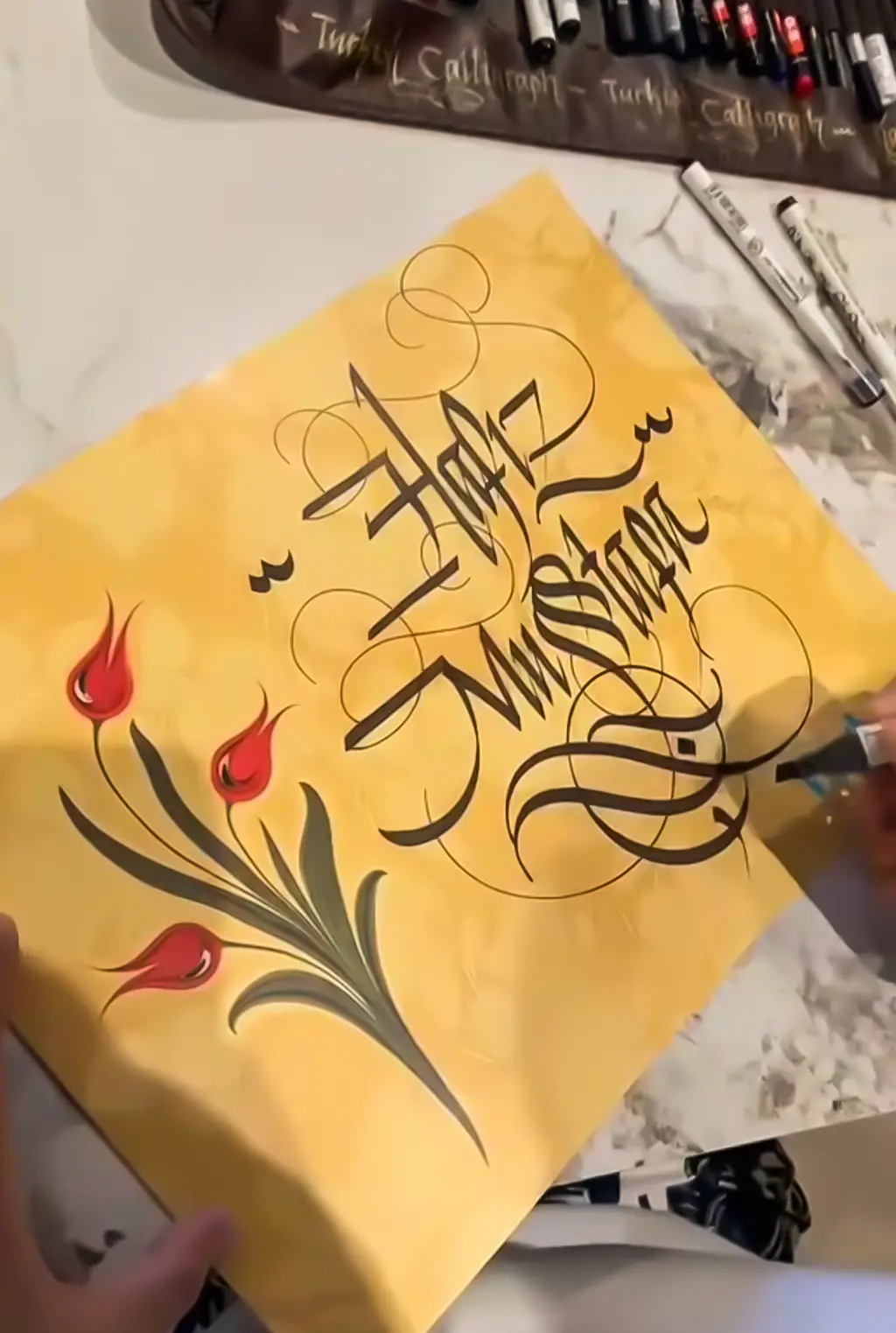
We wanted to share some of your drawings and photographs in Takvim-i Vekayi for a very simple reason: they make us happy.
Really happy.
A company can keep archives, documents, recipes, old advertisements, medals, photographs, and historical records. Hafız Mustafa has plenty of them after more than a century and a half.
Guest memories belong to another kind of archive.
They tell us how Hafız Mustafa lives inside someone else’s day.
A sketch made during coffee. A child’s colorful drawing. A watercolor painted after a visit. A photograph saved on someone’s phone for years.
All of them become small additions to our long history.
So please keep drawing.
Keep taking photographs.
Keep sending them to us.
Hafız Mustafa’s story began in 1864, and some of our favorite pages now come from the people who walk through our doors.
Up next in the Journal