
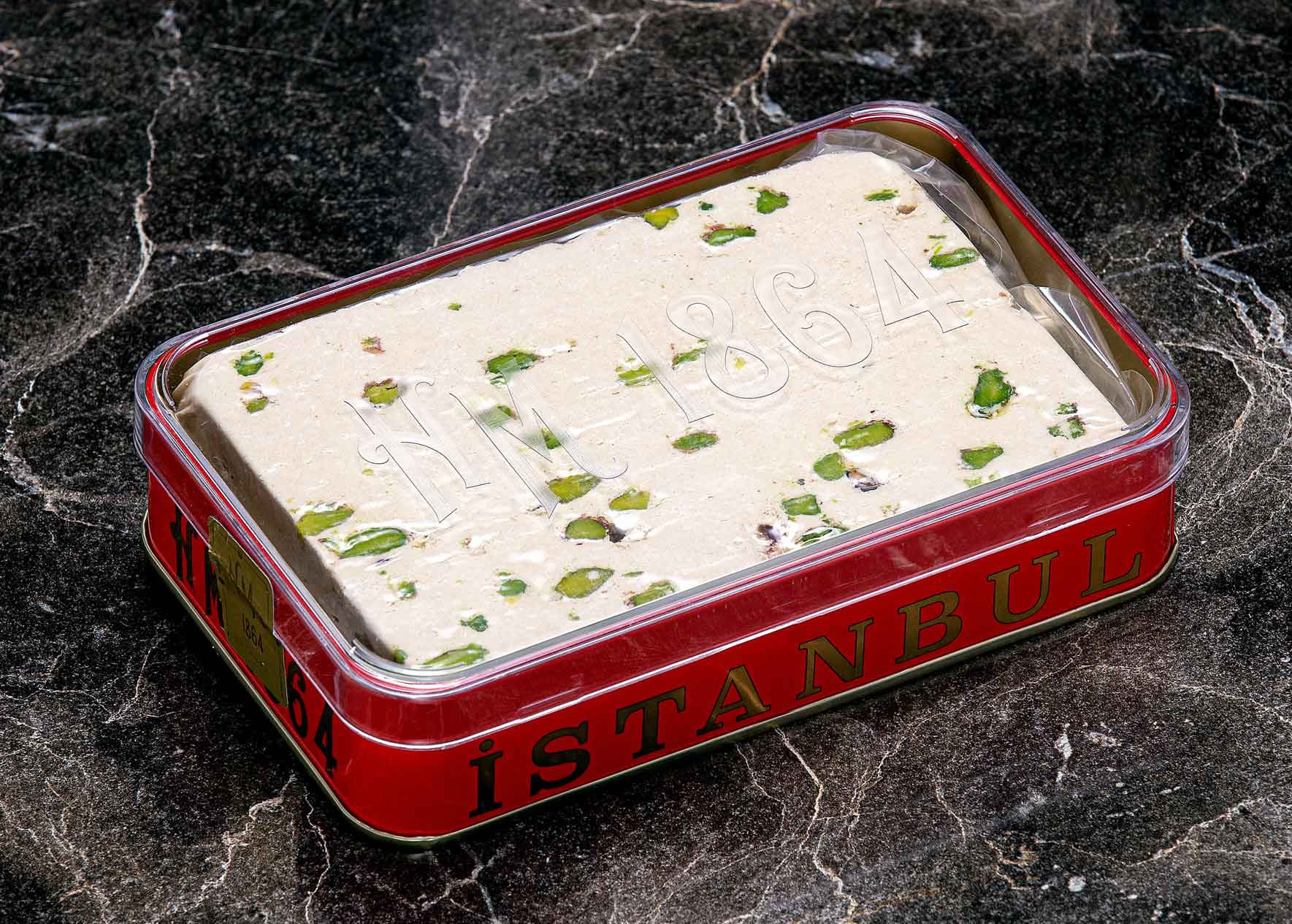
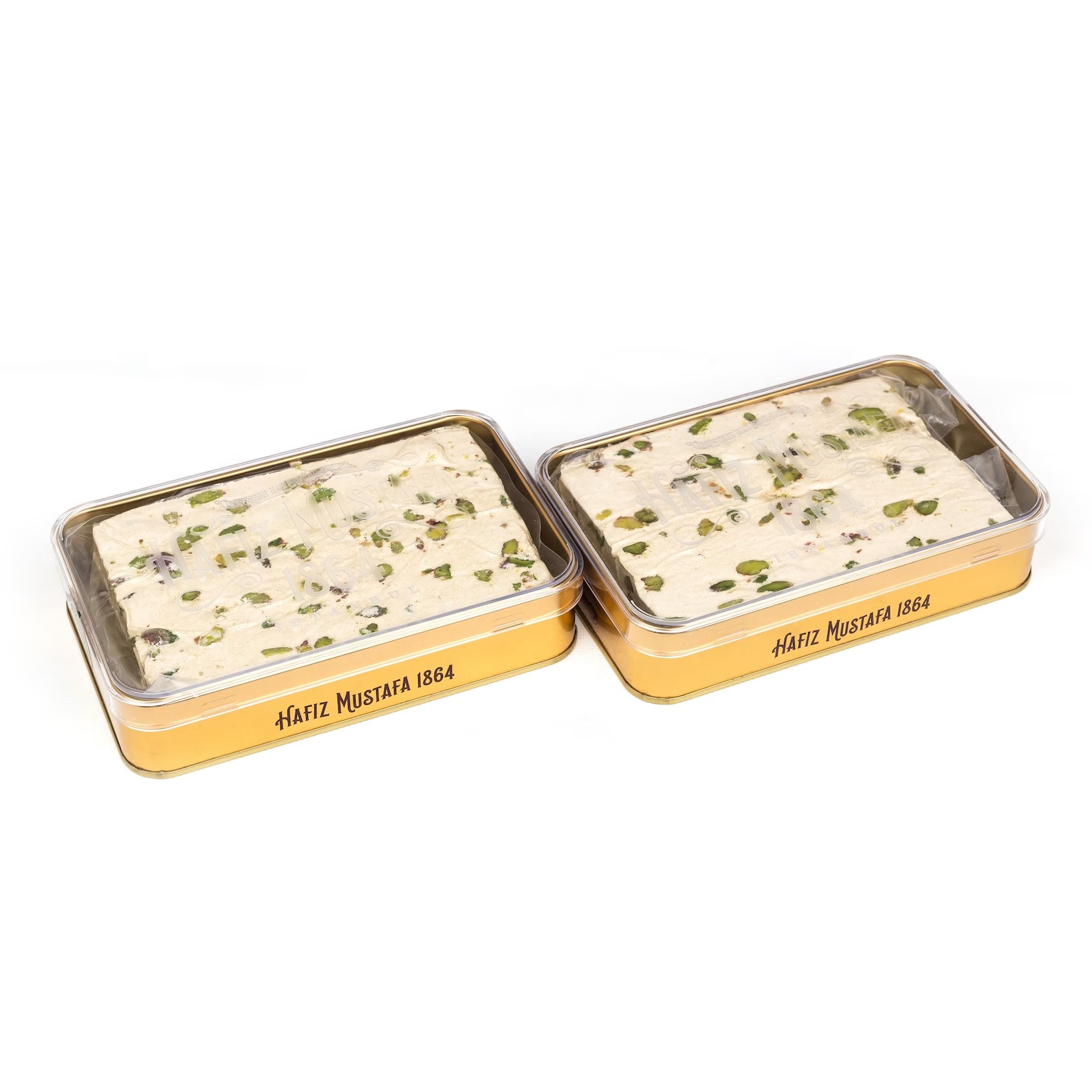
Tahini helva breaks into a fine crumb beneath the knife, with sesame richness running through a sweet substantial enough for a small slice. We offer pistachio and cacao varieties at Hafiz Mustafa, both in 450 g presentations. Sesame supplies the base, and the added flavor has its own place in the bite. The confection belongs to a family of Turkish desserts whose other members start with flour or semolina. Its preparation explains the unusual combination: a firm piece on the plate, then delicate fragments in the mouth.
Sesame and the Tahini Base
Tahini is a paste made from sesame seeds; a common preparation uses hulled seeds, which are roasted and ground for the paste. As the seeds pass through a mill, their oil enters the paste. Sesame supplies tahini's characteristic taste, so its role in helva extends throughout the confection. Inside the mill, seeds become particles carried in their own oil. The resulting paste has the richness needed for a sesame-based sweet. Roast level affects its aroma, and particle size influences how the paste feels in the mouth.
Roasted sesame has a nutty aroma in its own right, even when a recipe includes pistachio or another ingredient with a familiar nut character. Heat changes the seed's aroma compounds during roasting. Among the compounds associated with roasted sesame are pyrazines, which contribute nutty scents at very small concentrations. The paste's aroma varies with its raw material and preparation. Commercial sesame pastes range in color, and stronger roasted notes often accompany darker examples. Color alone supplies only a partial description; the aroma completes the sensory information. For tahini helva, the sesame base already has flavor to contribute when cacao or pistachio is added to the recipe.
In tahini helva, sugar syrup is incorporated into sesame paste during manufacture, and subsequent mixing contributes to the fibrous texture of the finished confection. Conventional recipes may include soapwort extract during preparation. Its foaming properties help confectioners work air into the sweet syrup. The syrup and sesame paste require mixing to distribute their components through the mass. Fine strands form within the finished sweet, which retains enough body for cutting. Recipe details vary among makers; the current pack's ingredient label lists the ingredients used for that product.
Helva Names a Family
Turkish helva includes sweets made from various principal ingredients, so the name alone leaves some questions about the dish on the table. Semolina helva starts with semolina roasted in butter, then mixed with sweetened milk or water. In flour helva, flour is cooked with fat and then sweetened. Both belong to the helva family, with preparation methods rooted in the cooking pot. The flour or semolina forms the body in those recipes. For our pistachio and cacao helva, tahini lends sesame character to a dense confection.
Cooked semolina helva is served warm in many Turkish preparations, with softened grains retaining the aroma acquired during their time in the pan. Flour helva has a finer texture from its principal ingredient. The cook stirs the flour in fat as its color deepens, then adds the sweet liquid. Tahini helva begins with a prepared sesame paste, which contributes its own fat to the confection. Turkish names such as irmik helvası and un helvası identify the grain-based recipes. Tahin helvası identifies the sesame-paste sweet.
Within Turkish household traditions, cooked helva accompanies religious festivals and memorial gatherings, with recipes prepared for people who share the event in person. Family members make the sweet for a birth or for a gathering after a death. Neighbors have traditionally joined the work at the cooking pot. The flour or semolina requires repeated stirring over low heat, so the preparation itself takes time. In the Ottoman period, charitable kitchens distributed helva on Friday evenings.
A Dense Sweet with a Fine Crumb
The first cut through tahini helva reveals how a compact piece can conceal a fragile interior, with small fragments collecting beside the knife. Pressure separates the fine internal strands as the piece breaks. Sesame paste adds oily richness to the crumb, so a small slice has a substantial mouthfeel. Thickness changes the size you encounter in a bite: a thin slice breaks readily, and a thicker piece retains more body until you press it with a fork.
Black tea accompanies tahini helva with a warm drink beside the dense confection, and plain tea leaves the sweet's sugar to shape the pairing. Coffee is another familiar choice in our helva descriptions. For readers who prefer Turkish coffee, its fine grounds produce a concentrated cup with sediment at the bottom. The sesame's roasted character suits the coffee's aroma, and cacao helva adds its cocoa taste to the plate. Preference for sweetened coffee remains personal.
Pistachio and Cacao Varieties
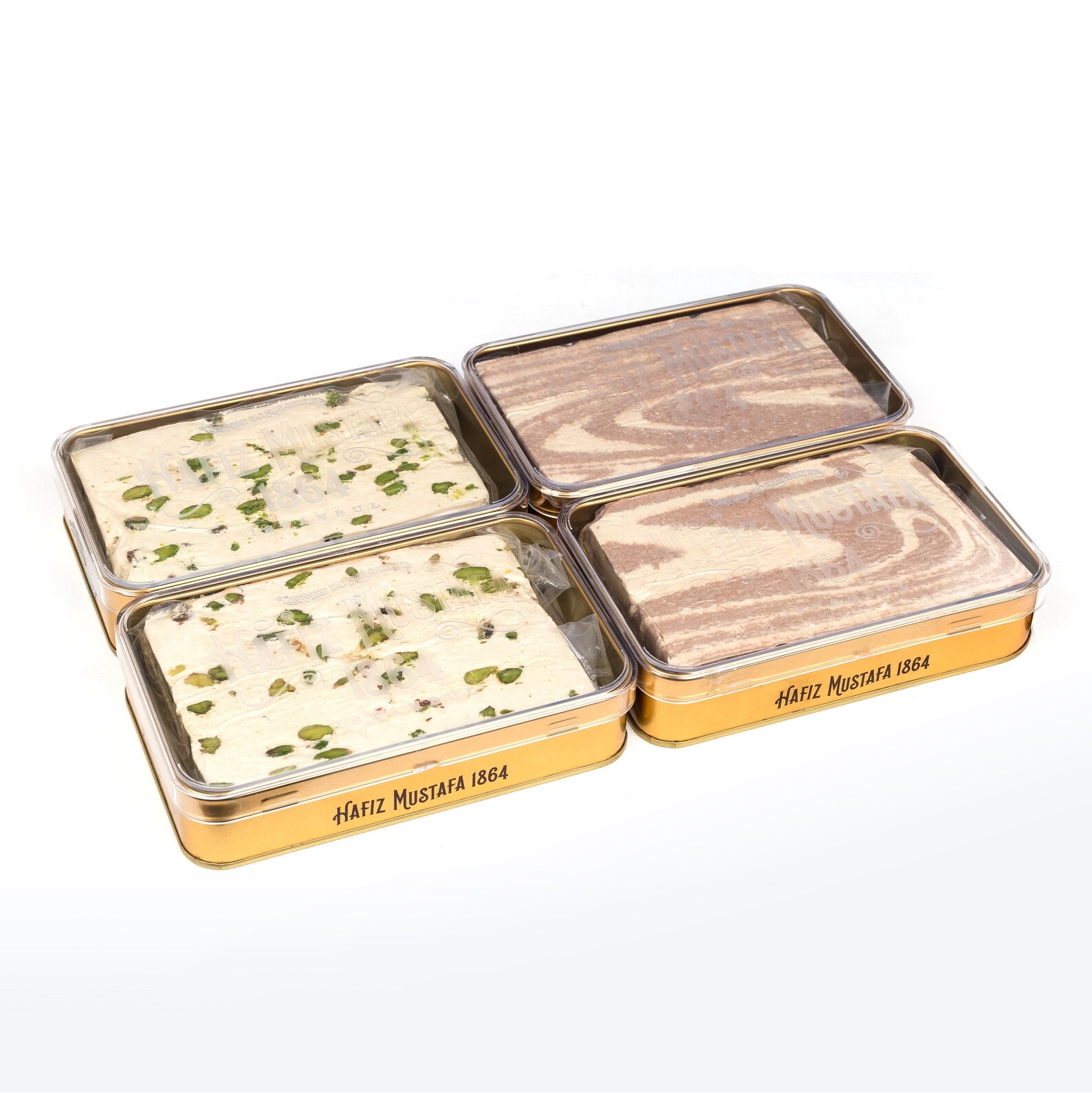
Pistachio Helva
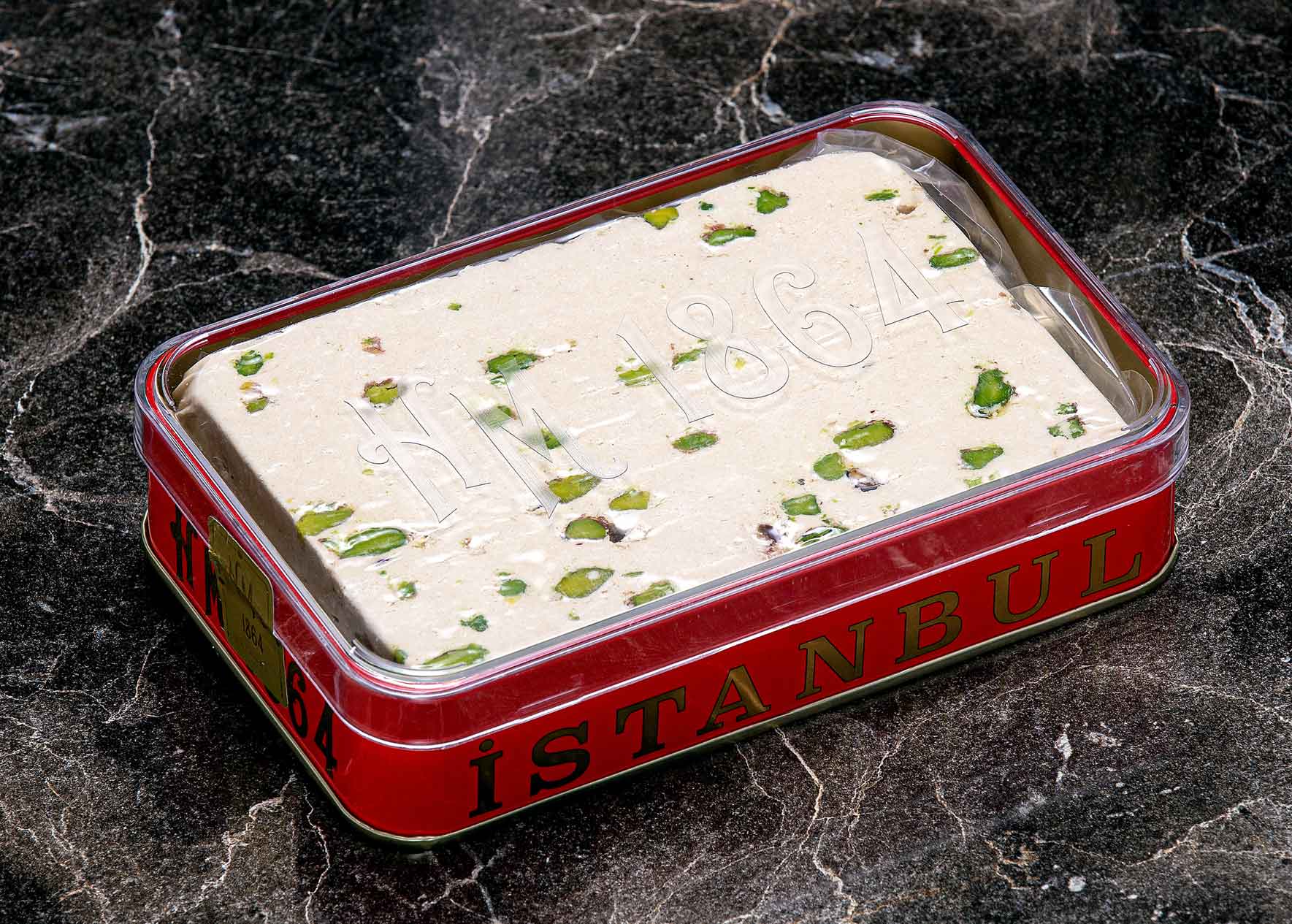
Pistachio Helva adds the nut's fragrant taste to the tahini base, with sesame remaining recognizable beneath the pistachio character throughout the bite. We offer Pistachio Helva in a 450 g presentation. Turkish black tea is the accompaniment suggested on its product page. The tea suits a small plate at breakfast or later in the day. For someone who enjoys pistachio in Turkish confectionery, helva introduces the nut through a sesame-rich base with a crumbly texture.
Cacao Helva
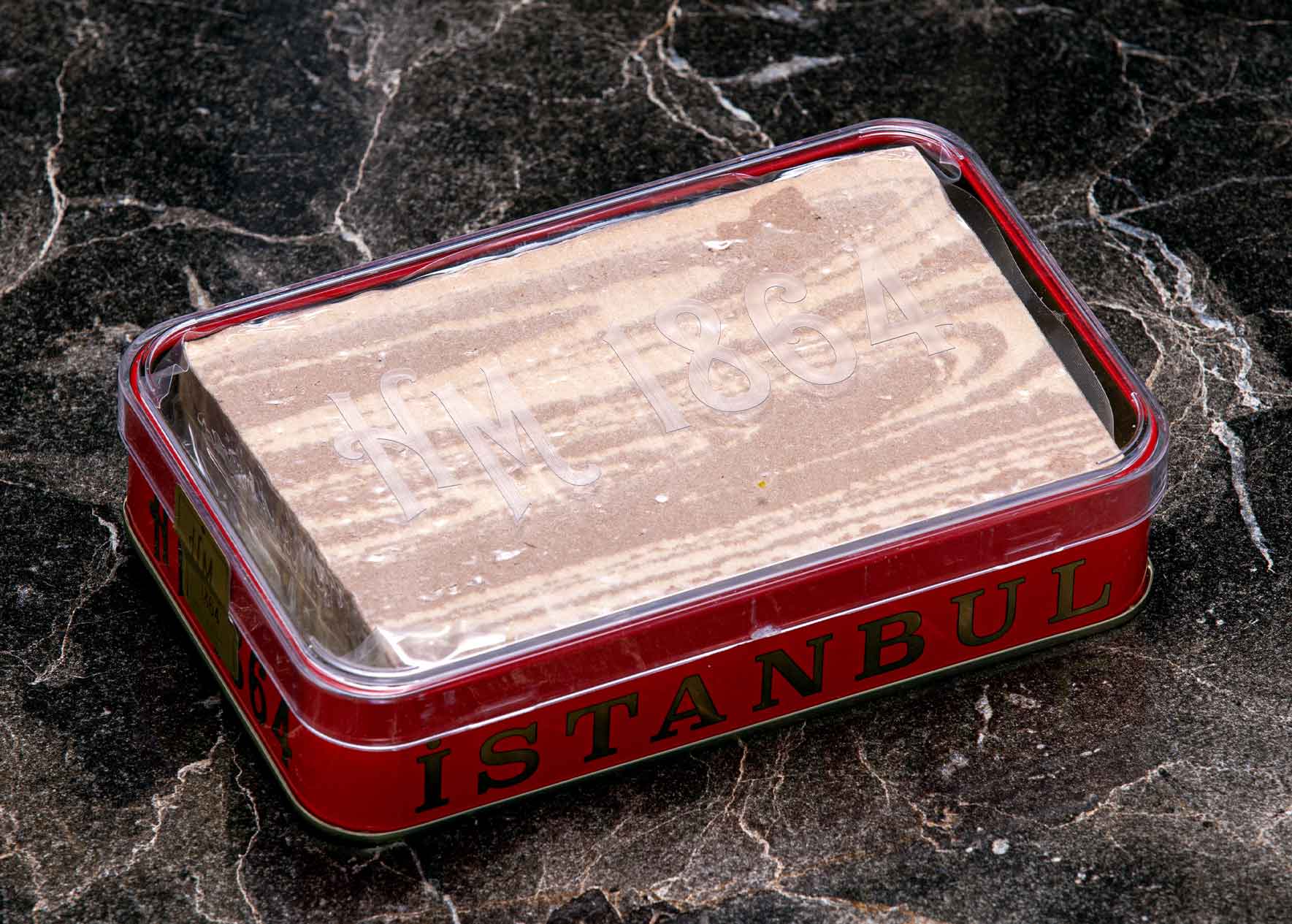
Cacao Helva has a pronounced cocoa flavor in the sesame-based confection, so the chocolate-like flavor complements the familiar density and fine crumb. We offer Cacao Helva in a 450 g presentation, with Turkish coffee as a suggested accompaniment. The cocoa taste runs through the sweetness and joins the sesame character in the same bite. Someone who prefers cocoa desserts has a clear reason to choose this recipe, with tahini lending the confection its richness.
Helva in Our Historical Record
In our historical record, tahini and helva appear among the products associated with Hafiz Mustafa since 1929, during Cemil Bey's years in the business. Cemil Bey was Hafiz Mustafa's son, and he retained his father's name alongside his own chocolate-associated name, Çikolat Cemil. Earlier generations had established the family trade in Istanbul, where İsmail Hakkı Bey began making candy in 1864. His son Mustafa worked beside him in the confectionery. We recount these family relationships in our history, together with the sweets associated with different periods.
Cemil Bey's advertisements put the family name in front of Istanbul customers buying sweets for feast days, with Bahçekapı listed as their destination. His chocolate-associated name appeared beside his father's, so readers encountered both generations in the same advertisement. Tahini and helva were part of the shop's assortment during this period. The historical record discusses them together, which places the sesame paste beside the confection made with it. We still make helva today, with pistachio and cacao recipes available through our UAE shop.
The Pack and Its Storage
Sesame oil remains a liquid component within tahini helva, where it occupies spaces among the sugar particles and the sesame-derived protein material. Over time, some oil can move through the confection and collect at its surface. Temperature and storage duration affect this movement, together with the sweet's texture. The behavior belongs to the food's physical composition; a particular pack still needs its own storage guidance. If your helva's appearance raises a question, our customer team can advise you using the product details.
The current pack's label is the reference for product-specific ingredient information and allergen details relevant to the person who will eat the helva. Sesame belongs to tahini, and pistachio is named in our pistachio variety. For questions concerning other ingredients or cross-contact, contact our customer team with the product name. Follow the pack's storage instructions after opening, together with its date information. Visit our SHOP for current helva prices.